If the constituency of your law enforcement agency is more than a few hundred people, you almost certainly have what the cops of my era called "frequent flyers." These are the people whom you have arrested again and again–so much that you address them by name as soon as you see them. Your booking desk may have a list with these folks' names on it taped to the counter, so their files can be brought up quickly next time they're in.
The web site The Smoking Gun recently ran the tale of Henry Earl, who was arrested on August 31 for what was at least the 1,332nd time. The story has a montage of Henry's booking photos, most of which show him grinning into the camera. Most of the arrests are for "public order" offenses, such as public drunkenness and disorderly conduct, although he has a few for "terroristic threat," as well. He has spent at least 5000 days–over 13.5 years–in jail. Life, on the installment plan.
Excessive use of police resources
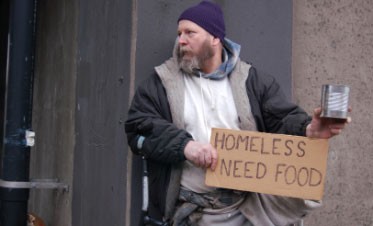
One of my sergeants suggested there ought to be a felony charge for people like this–something like "Excessive use of police resources." People like Henry are a curse on the working life of the patrol officer. The pattern seldom changes. Henry gets drunk, then falls asleep inside someone's workplace, or takes a leak in their doorway, or blocks the path of a citizen who refuses to give him a dollar. The police are called, an officer responds, Henry is cuffed and half-walked, half-dragged to the patrol car, taken to jail, and booked. The officer writes a report. A day or so later, Henry appears before a judge who is almost as familiar with him as the cops are, and the judge sentences him to something between time served and ten days. Henry gets out, and immediately starts looking for a drink. Repeat until dead.
The only time Henry gets any nutritional food or practices any kind of personal hygiene is when he is in jail, so his overall health is fragile. He may also have diabetes, liver disease, seizure disorders, or any number of infectious diseases. Several times a year, he becomes deathly ill, falls down and gets a fracture or an open wound, or is beaten up by another homeless person, and he is taken to the hospital. Each ER visit results in a three–more likely four–digit bill for the city or county; each hospital admission will cost upwards of $20,000.
Officers have applied ingenious–and usually illegal–solutions to their local problems. Cops have been known to drive frequent flyers outside the boundaries of their own jurisdictions, dropping them off in someone else's territory. In the 1970s, a couple of cops loaded up their prisoner transport van with some of their favorite people, and unloaded them into an unattended railroad boxcar. That one backfired big time when the boxcar was opened several days later in another state, and the occupants were almost dead from hunger and dehydration. I'm not endorsing any of these actions, but they're illustrative of how frustrated with the problem cops can get.
Local governments should be frustrated, too. The hidden costs associated with a single Henry Earl can run into a million dollars or more, taking into account health care, commitment of criminal justice resources, community outreach and social welfare costs, and other things that don't appear in a single budget and expenditures item.
There have to be consequences
Many, if not most frequent flyers are mentally ill. They are schizophrenic, bipolar, and substance abusers. Most of them are treatable, and most have been under treatment at one time or another. Many of them do okay when they're in residential treatment, but once released back into the community, they throw away, sell or forget to take their medications, and they don't keep appointment calendars. If they ever developed any sense of planning for the future–even as near as tomorrow–they've forgotten about it. They live in the now, and what makes them feel good this instant is what they will do.
At an IACP conference a few years back, I sat next to a chief from a medium-sized agency in California. We got to be talking about the magnitude of the drug problem in his city, and he mentioned that most low-level drug offenders in his state are sentenced to diversion programs in lieu of jail or other penalties. These have an extremely high failure rate, as most of the people in them have little incentive to commit to the program. "There have to be consequences," the chief told me. Too true. On the whole, the carrot will not work if there is no stick. It's far less expensive to rehabilitate a substance abuser than it is to keep arresting and jailing him, but only if he stays rehabilitated.
It's difficult to rally support for treatment and care of frequent flyers, because most people find them disgusting. They produce nothing, they smell bad, they make everyone feel uncomfortable. When people pass them on the street, they avoid making eye contact. They don't want to be asked for money, and they feel a little guilty for not reaching out to help their fellow man.
There are other solutions, but they're on the draconian side. We could just write them off and ignore them. There's even legal precedent for this. Back in merry olde England, from whence we got our common law, people who were really a pain in the butt could be declared "outlaws." The king's men would be looking for them, but in the meantime their status meant they no longer enjoyed the king's protection. Anyone that found them and knew of their status could have their way with them. Target practice, skin 'em and make a lampshade, you name it. That wouldn't work here and now. The United States is still the kindest and most generous nation on earth, even if we sometimes hate ourselves for it.
There is a point to all of this. The next time you come upon your town's version of Henry Earl, at least consider the possibility of doing something other than taking him to jail. If you see a sliver of desire to get things right, see if it might be Henry's time. Hold out the carrot, and give him some incentive to break the cycle. Most of the time, Henry is going to try and play you. But if you make that call correctly, even once, you can save your community a million bucks. It's a better shot than the lottery.